Reviews & Commentaries
Reviews and commentaries by Elizabeth A. Ronan, sorted in reverse chronological order.
2024
-
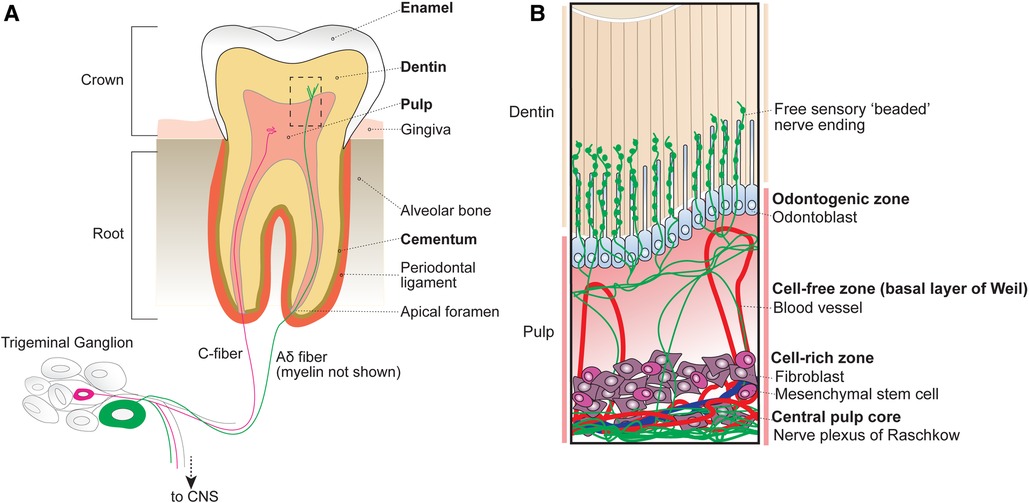 The anatomy, neurophysiology, and cellular mechanisms of intradental sensation.Frontiers in Pain Research, 2024
EXPAND ABSTRACT
Abstract: Somatosensory innervation of the oral cavity enables the detection of a range of environmental stimuli including minute and noxious mechanical forces. The trigeminal sensory neurons underlie sensation originating from the tooth. Prior work has provided important physiological and molecular characterization of dental pulp sensory innervation. Clinical dental experiences have informed our conception of the consequence of activating these neurons. However, the biological role of sensory innervation within the tooth is yet to be defined. Recent transcriptomic data, combined with mouse genetic tools, have the capacity to provide important cell-type resolution for the physiological and behavioral function of pulp-innervating sensory neurons. Importantly, these tools can be applied to determine the neuronal origin of acute dental pain that coincides with tooth damage as well as pain stemming from tissue inflammation (i.e., pulpitis) toward developing treatment strategies aimed at relieving these distinct forms of pain.
2022
-
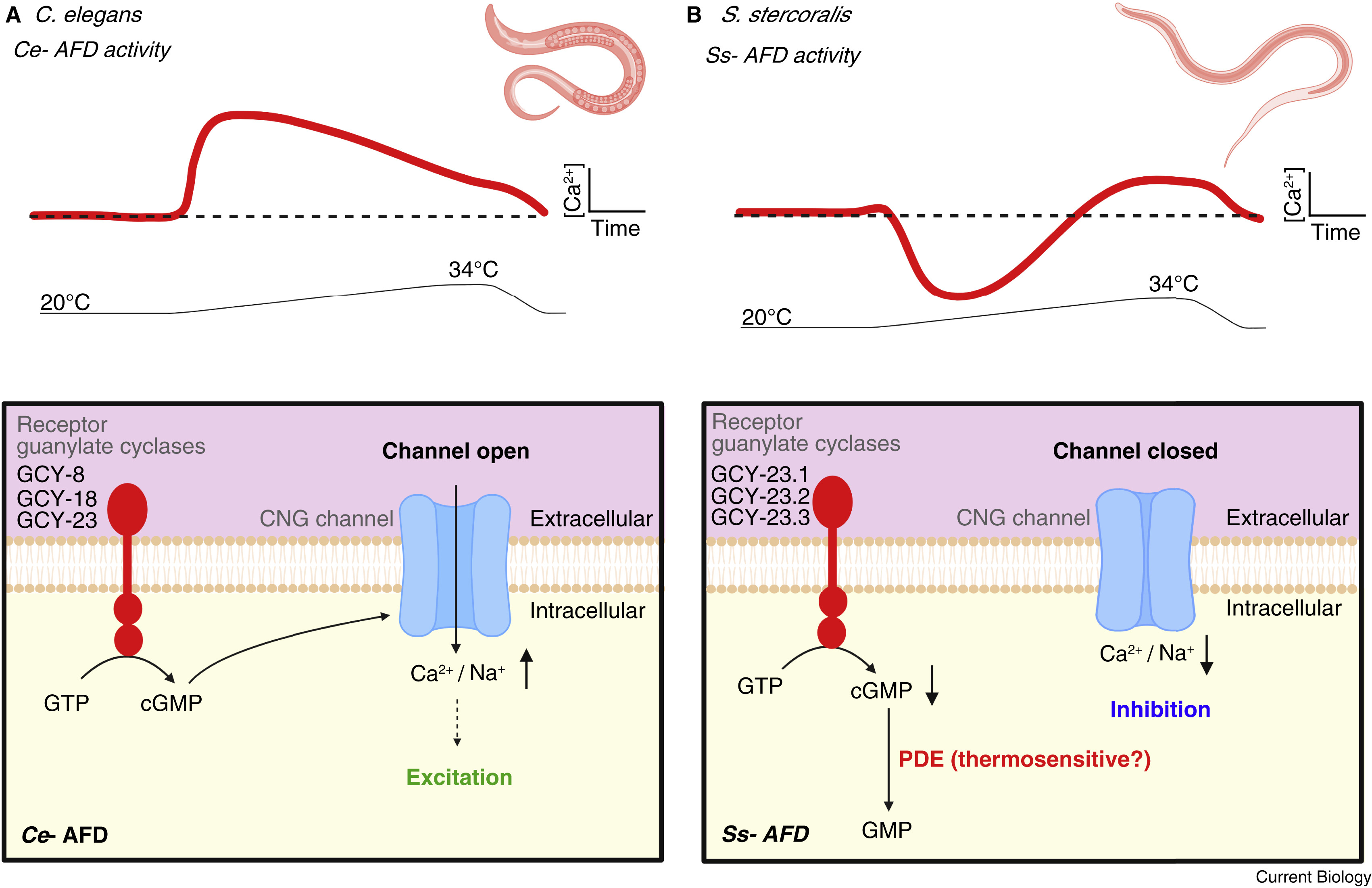 Thermosensation: How a human-infective nematode finds its host.Current Biology, May 2022
EXPAND ABSTRACT
Abstract: The parasitic nematode Strongyloides stercoralis locates human hosts via thermal cues through unknown neural mechanisms. A new study finds that the heat-sensing neuron AFD mediates attraction to human body heat. Interestingly, this neuron also mediates thermotaxis in the nematode C. elegans.
2021
-
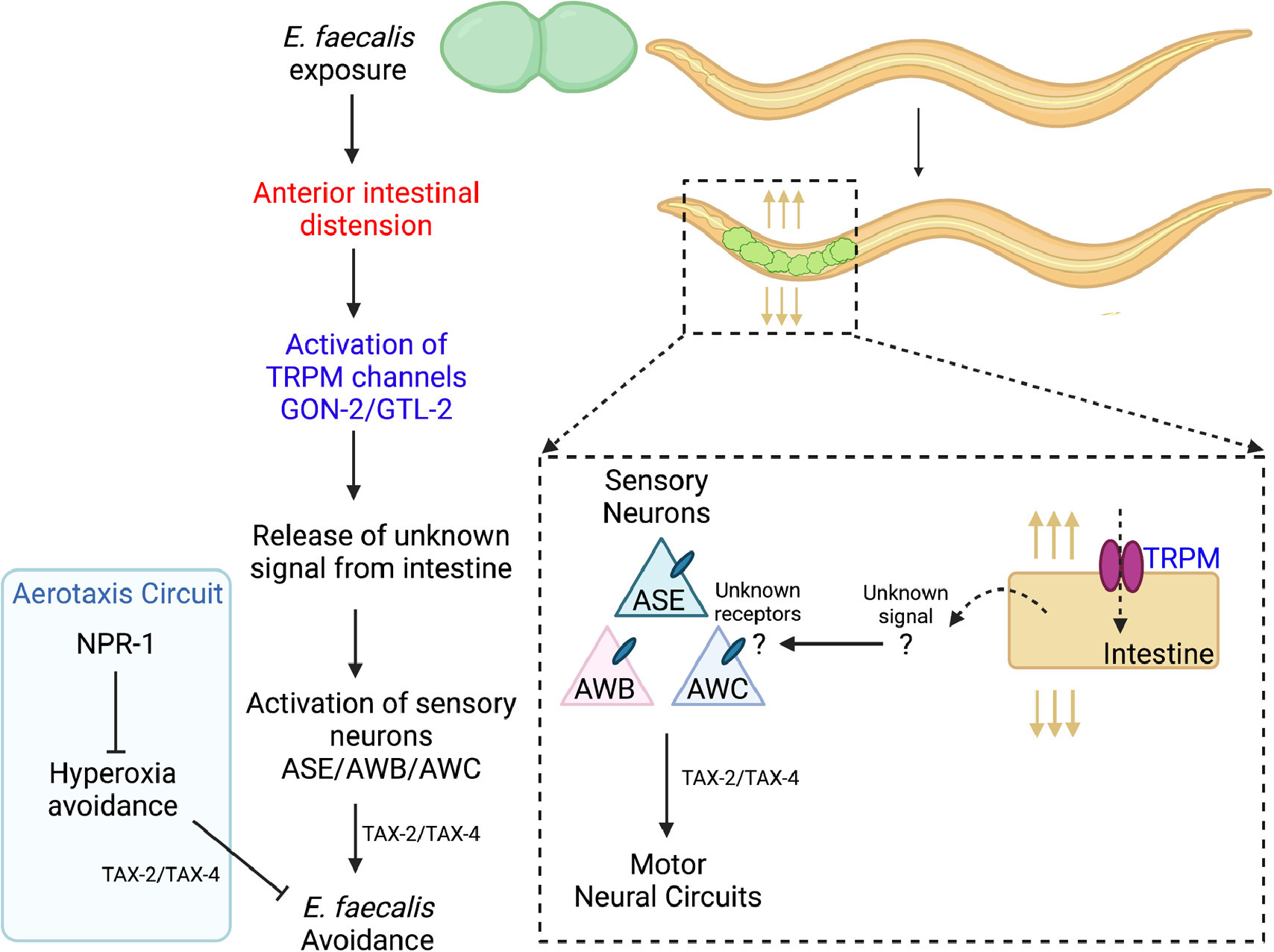 TRP channels: Intestinal bloating TRiPs up pathogen avoidance.Cell Calcium, Sep 2021
EXPAND ABSTRACT
Abstract: Transient receptor potential (TRP) channels are expressed in many nonneural tissues where their functions are not well known. Using C. elegans as a model, a new study demonstrated that colonization of the Gram-positive pathogenic bacteria E. faecalis in the intestine causes intestinal distention. Two TRPM channels sense such intestinal distension to trigger fast pathogen avoidance behavior, thereby limiting pathogen infection. This work signifies the novel role of TRP channels in gut physiology and pathogen defense.